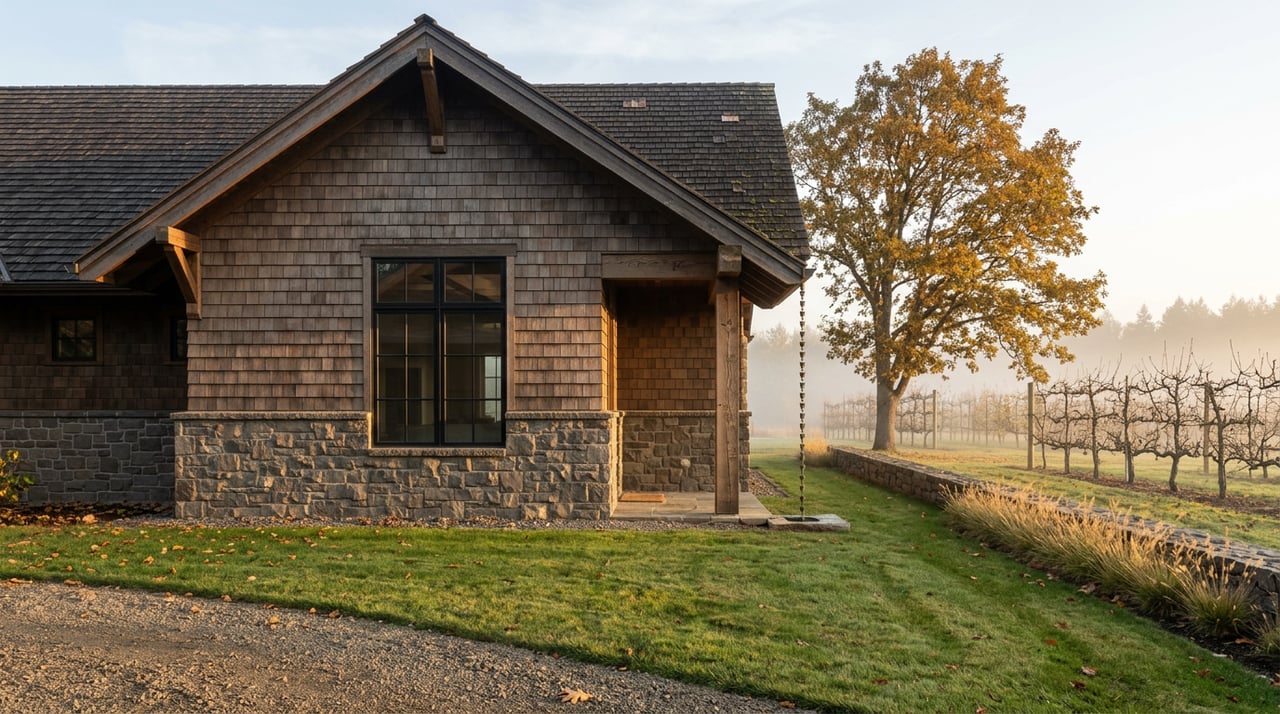
A five-acre pear orchard near Parkdale hit the market recently with a line that stops most buyers cold: a residential building permit will be available in two years. No lawsuit. No pending appeal. No contractor backlog. Just a wait, spelled out in the listing itself, as if it were a closing date.
Most buyers read that and assume a paperwork problem at the county. It isn't. It's a tax problem, and understanding why matters more than the view, the trees, or the price per acre, because it changes what you're actually buying.
The Clock Is Income, Not Permits
Parkdale sits inside Hood River County's Exclusive Farm Use zone, the same statewide EFU framework that governs most farmland in Oregon under ORS 215 and the county's own EFU ordinance. Land in an EFU zone gets a favorable property tax rate through farm-use special assessment, but that rate comes with a condition: the property has to function as an active, profit-intended farm, and a new primary dwelling on that land generally requires the owner to show a documented history of farm income first.
It isn't a construction delay. The building-permit question turns on the farm-income record the county requires. The Oregon Department of Revenue's own farm use guidance walks through this: qualification is automatic once a bona fide farm use with profit intent exists, but disqualification and requalification both run on strict timelines, and a buyer who lets the orchard sit unmanaged during a sale can reset that clock rather than shorten it.
The flip side carries a real cost too. If land drops out of farm use, Oregon law allows rollback taxes reaching back several years, a bill that shows up long after the closing champagne is gone. A buyer who plans to let the orchard go fallow and just build a house should ask a very specific question before making an offer: what does this parcel need to stay qualified, and what happens to the tax bill the day it doesn't.
The Water Right Is the Asset, Not a Feature
Every orchard listing in the valley leans on the same phrase: water rights included. That line is doing more legal work than it looks like.
Under Oregon law, a water right is generally appurtenant to the land, meaning it's attached to the specific parcel it was certified for and transfers automatically with the sale unless it's been specifically excluded in the deed or the buyer has separate notice that someone else holds an interest in it. That's the default. It is not automatic in every case, and Oregon law backs that up with a specific disclosure duty: sellers in a real estate transaction involving a water right are required to disclose it, under ORS 537.330.
In practice, that means a buyer's job isn't just confirming that "water rights" appears in the listing. It's confirming which district holds the delivery obligation, how many water-right acres are actually certified to the parcel versus how many acres the orchard covers, and whether any conveyance agreement has already carved the water right away from the land in a prior sale. The Oregon Water Resources Department's own guidance on this is blunt: even where a water right conveyance agreement exists, the right stays legally appurtenant to the land until the state approves a formal transfer. Paper promises and legal reality can disagree for years.
Not All Parkdale Water Is the Same Water
Ask most people in the valley about irrigation and they'll mention this year's snowpack. That's a lower-valley story, not necessarily a Parkdale one, and treating them as the same system is the kind of mistake that costs a buyer real money.
The lower Hood River Valley is served by Farmers Irrigation District, which posted a public notice this season limiting Middle and Upper Section patrons to 75 percent of their water right because of a historically low snowpack year. FID is also absorbing a hydropower revenue hit after its power purchase contract with PacifiCorp expired at the end of 2025 and its new rate dropped from 8.2 cents to 4.8 cents per kilowatt-hour, a change the district says will push irrigation bills higher going forward.
Parkdale's orchards, though, mostly sit inside a different system entirely: the Middle Fork Irrigation District, headquartered right on Clear Creek Road in Parkdale. MFID draws from the Coe and Eliot branches of the Middle Fork Hood River and from Laurance Lake, the reservoir behind Clear Branch Dam, which the district says supplies roughly 30 to 40 percent of its irrigation water in storage rather than relying purely on current-year snowmelt. That's a structurally different risk profile than a system with no reservoir buffer at all.
None of that means MFID patrons are exempt from a dry year. It means the two districts don't automatically share the same exposure, and a buyer who hears "Gorge water shortage" in the news and assumes it applies uniformly to every orchard parcel is skipping a step. The right question isn't "is there a water shortage in Hood River County." It's "which district serves this exact parcel, and what has that district told its patrons this season."
| District | Area served | Primary source | Reservoir storage / other notes |
|---|---|---|---|
| Middle Fork Irrigation District | Upper Hood River Valley, Parkdale area, roughly 6,358 irrigated acres | Coe Branch, Eliot Branch, Laurance Lake | Yes, Laurance Lake behind Clear Branch Dam |
| Farmers Irrigation District | Lower Hood River Valley | Direct diversion, snowmelt-dependent | Limited, currently under 2026 conservation restrictions |
| East Fork Irrigation District | Portions of the mid-valley | East Fork Hood River, aging open-canal system | Ongoing canal-to-pipe conversion underway |
The Easement List Tells a Second Story
Pull the title report on a Parkdale-area orchard and you'll often find two names that have nothing to do with farming: an irrigation district and the Mount Hood Railroad. That pairing isn't a coincidence, it's geography.
The Mount Hood Railroad's original line was built between 1905 and 1910, running south from Hood River through Pine Grove, Odell, and Dee before terminating at Parkdale. Orchard parcels laid out along that corridor over a century ago frequently carry a rail easement alongside the irrigation conveyance easement, both predating the current owner by decades. Neither one is usually a problem. Both are usually worth reading closely, and a buyer who skips the title review may miss important details until after closing.
If You're Thinking About Short-Term Rental Income
A common plan for a small Parkdale acreage buy is to offset the carrying cost with a short-term rental. US Land Life says Hood River County allows it on EFU-zoned land without a farm or forest tax deferral, but with real limits worth checking before you build a business plan around it:
- Capped at 180 operating days per year
- Rental limited to the primary dwelling itself, not an accessory building or ADU
- Requires a conditional use permit from the county
- Weddings and other commercial events tied to the rental are not permitted
Those limits sit on top of, not instead of, the farm-use and building-permit questions above. A parcel that's still working through its farm-income qualification period for a dwelling permit isn't generating short-term rental income in the meantime either.
What This Means Before You Write an Offer
The list price on a Parkdale orchard reflects the trees and the mountain view. The closing file reflects three separate things a buyer actually needs to verify: how many years of farm income the parcel has on record and what that means for any future building permit, which irrigation district serves the parcel and what its current-season patron notices say, and what easements already run across the land from the railroad or the ditch company. None of those three show up in a listing photo, and all three change what the property is actually worth to you.
A few questions worth bringing to any Parkdale acreage tour:
- Which irrigation district serves this exact parcel, and how many water-right acres are certified to it versus the total acreage?
- Has the seller provided the water right disclosure required under Oregon law, and is there any separate water right conveyance agreement on file?
- How many years of documented farm income does the property have, and does that support a near-term building permit application?
- What easements appear on the title report, and do they run with the irrigation district, the railroad, or both?
FAQ
Does the water right automatically transfer when I buy a Parkdale orchard? Generally yes. Oregon treats water rights as appurtenant to the land, meaning they convey with the property unless specifically excluded in the deed or unless the buyer has notice that the right was separated in an earlier transaction.
If a listing says "water rights included," is that enough to rely on? Treat it as a starting point, not a conclusion. Confirm the certified water-right acreage, the district of record, and whether any conveyance agreement predates your purchase.
Can I build a house right away on EFU-zoned orchard land? Not automatically. New primary dwellings on farm-zoned land typically require documentation of qualifying farm income, and the specific threshold and timeline depend on parcel size and county rules.
Buying acreage in Hood River County rewards patience with the paperwork as much as patience with the orchard itself. If you're comparing Parkdale parcels and want a second set of eyes on the water rights, the easements, and the farm-use timeline before you write an offer, Julie Gilbert has spent years walking Gorge acreage deals through exactly this kind of detail. Reach out for a conversation, or get your free home valuation to see where your own property stands.
This article is general information, not legal, tax or financial advice. Consult a qualified professional about your situation.