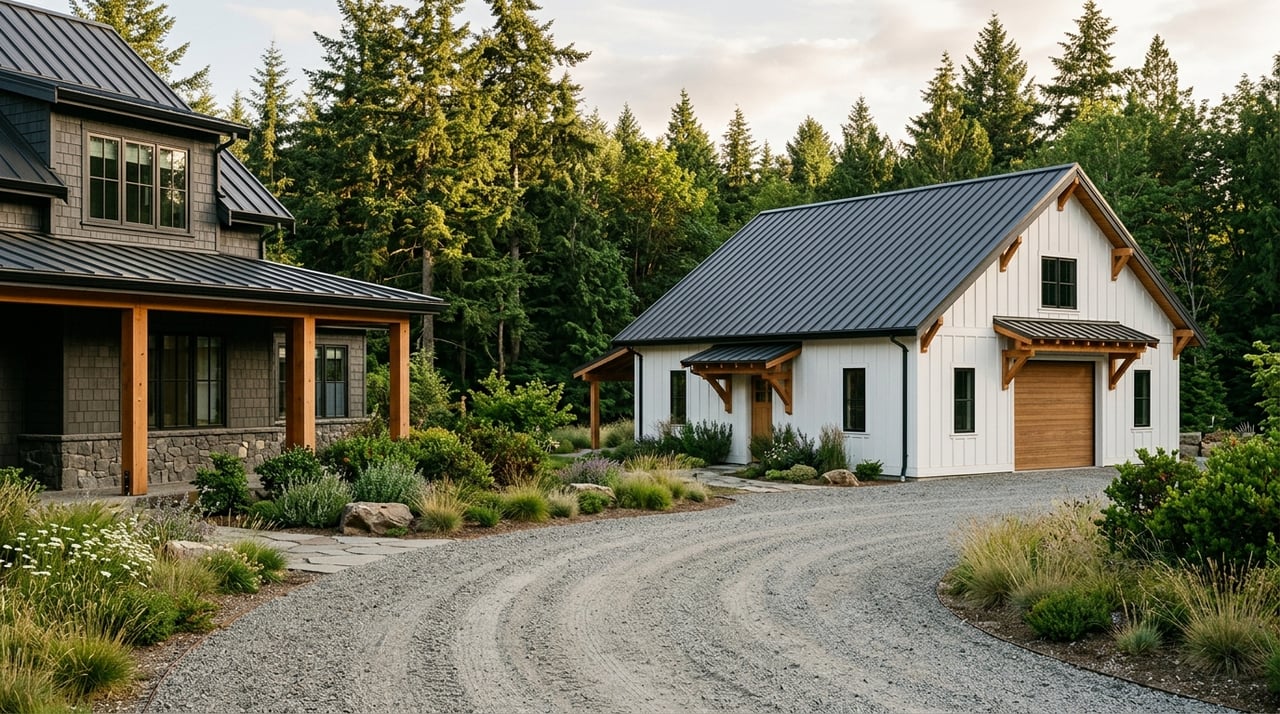
If you are dreaming about more space, bigger views, and a slower pace near Lyle, WA, acreage can be incredibly appealing. But buying rural property here is not just about finding a beautiful setting. You also need to understand access, water, septic, land-use rules, and the day-to-day realities of owning land in Klickitat County. This guide will help you focus on the details that matter most so you can buy with more confidence. Let’s dive in.
What acreage near Lyle often looks like
Near Lyle, you are more likely to see rural-residential acreage, small-farm parcels, and homes with land than a typical suburban subdivision pattern. That fits the area’s broader land-use mix, which includes farming, logging, cattle grazing, public recreation, and rural residential uses.
Lyle itself is one of the urban areas exempt from Columbia River Gorge Scenic Area regulations. Outside those urban boundaries, land may fall within the Scenic Area’s general management area, where new development is reviewed for impacts on protected resources. That distinction matters early because it can shape what is possible on a parcel.
The setting is part of the draw. With access to places like the Lyle Trailhead and the Klickitat Trail, the area attracts buyers who want room to spread out and enjoy the outdoors. In many cases, the appeal is as much about lifestyle as it is about the house itself.
Start with land-use location
Before you fall in love with a property, ask a basic question: Is the parcel inside Lyle’s exempt urban area or outside it? That answer can affect permitting, timelines, and what kind of review may be required for future plans.
If the land is outside the urban area, new development may be reviewed under the Scenic Area framework. The Gorge Commission notes that land-use review times can be at least 30 days for expedited review or 72 days for standard review, and often longer in practice. Additional county or agency approvals may still be needed.
This does not mean you should avoid acreage outside town. It simply means you should go in with clear expectations and ask the right questions early. A pre-application conversation with the appropriate local office can save time and frustration later.
Know what rural living includes
Acreage near Lyle can be beautiful, peaceful, and practical, but rural ownership comes with tradeoffs. Klickitat County notes that much of its rural land is actively used for crops, livestock, lumber, and mineral resources, and normal agricultural activity is protected under Washington and county right-to-farm rules.
In plain terms, you may experience dust, smoke, slow-moving farm equipment, livestock activity, and work happening at all hours. Those conditions are not unusual in rural areas. They are part of how working land functions.
You also take on responsibilities as a landowner. The county says owners are responsible for noxious weed control, which is an important item to budget for and stay ahead of. If you are buying acreage for the first time, this is one of the clearest differences from owning a home on a standard in-town lot.
Access and roads deserve extra attention
One of the biggest due-diligence issues with acreage is access. A property can look ideal on paper and still become complicated if the road, driveway approach, or year-round access is not what you expected.
Klickitat County maintains 1,084 miles of roads, including 633 miles of gravel and 30 miles of unimproved dirt. Many rural properties are also served by private access roads or roads that are not maintained year-round. You should not assume a gravel road will eventually be paved unless there is a road improvement district in place.
If a private approach connects to a county road, the county says it must be permitted and meet standards for drainage and site distance. That is an important question to confirm during your review period, especially if the parcel is vacant or if a future homesite is part of your plan.
Seasonal conditions matter too. The county warns that winter weather, narrow roads, and load restrictions can affect construction access, deliveries, mail service, snowplowing, and emergency response. If you plan to bring in a manufactured or modular home, the route to the property is part of the due diligence, not an afterthought.
County maps are useful, but not final proof
Klickitat County’s interactive mapping tools are helpful for screening a property. They can show parcel layouts, zoning, roads, utilities, pipelines, transmission lines, and other overlays that help you get oriented quickly.
Still, the county is clear that these maps are graphical representations only. Surveys and deeds of record should be used for accuracy. In other words, a map is a great starting point, but it is not the final word on boundaries or legal details.
That is especially important with acreage because assumptions can get expensive. If fences, roads, or visible use patterns do not match what the legal record shows, you want to know before closing.
Water can make or break the deal
For many acreage buyers, water is the first major make-or-break issue. In Klickitat County, proof of potable water is required before building and placement permits are issued for private water supplies.
The county’s water availability review may require a well log, bacterial and nitrate testing, and a yield test if the well produces under 5 gallons per minute. If surface water is the source, water-right verification may also be required. That means you should not assume an existing well, shared source, or surface feature automatically checks the box.
If you are buying vacant land, water planning is even more important. If you are buying a home on acreage, you still want to verify what serves the property today and what documentation exists. Reliable water is not just a comfort item in rural property ownership. It is foundational.
Septic is part of the package
Sewer service is generally not available in rural areas of Klickitat County. That means acreage buyers should expect an approved on-site septic system or another treatment process rather than a municipal sewer connection.
For new or replacement septic systems, the county requires a site and soil evaluation application. The county also maintains a list of licensed septic installers and pumpers. If the property is vacant or the existing system information is incomplete, septic feasibility should move near the top of your checklist.
The site evaluation process can also involve practical steps like hiring an excavator for perc holes or digging them yourself, along with calling 811 before digging. It is a very hands-on reminder that rural property due diligence often involves fieldwork, not just paperwork.
Utility service may be farther away than you think
Power is provided countywide by Public Utility District No. 1 of Klickitat County, but that does not mean every parcel has easy, low-cost utility access. The county notes that electric and telephone service may not be readily available in every area and that line extensions can be costly.
Some Scenic Area locations may also require underground utility lines. In very rural locations, telecommunication service can be challenging, and even trash pickup may depend on year-round road access. If you work remotely, plan future construction, or want a more turnkey move, these details matter a lot.
When you tour acreage, it helps to think beyond the view. Ask where the nearest utility connections are, what is already installed, and what additional service might cost.
Small-farm buyers should look deeper at water use
If you are considering acreage for a hobby farm, animals, or irrigated use, your water questions become even more important. Klickitat County advises buyers to contact the Washington State Department of Ecology about water rights and to check with WSU Extension for grazing and irrigation questions.
The county also notes that much of rural Klickitat County receives less than 17 inches of precipitation per year. That is a useful reality check if you are picturing gardens, pasture, or seasonal planting. In this landscape, irrigation capacity and water storage can be just as important as the size of the parcel.
This is one area where broad assumptions can lead you in the wrong direction. A property that looks green at one time of year may have very different long-term water needs than you expect.
Wildfire readiness is part of rural ownership
Buying acreage near Lyle also means thinking ahead about wildfire preparedness. Washington DNR recommends checking local burn restrictions before lighting any fire, creating defensible space around homes, and using fire-resistant plants as part of overall planning.
Klickitat County maintains local burn-ban zone maps, resolutions, and fire resource information, and those restrictions can change by season. If you are buying land with trees, grasses, or outbuildings, wildfire readiness should be part of how you evaluate the property and how you plan to maintain it.
This does not need to feel overwhelming. It just means rural ownership works best when you think about stewardship from the start.
A practical acreage checklist
Before you move forward on acreage near Lyle, focus on these core questions:
- Is the parcel inside Lyle’s urban area or in a Scenic Area review area?
- Is there legal access to the property?
- Is the road county maintained, privately maintained, or seasonal?
- Does the approach from the road have the permits it needs?
- Has potable water been verified?
- Is there an existing septic system, or has septic feasibility been confirmed?
- How close are power and telecom services?
- If you want animals or irrigation, are water-right questions resolved?
- What wildfire, weed-control, and rural maintenance responsibilities come with the land?
Acreage near Lyle can offer a remarkable Gorge lifestyle, from wide-open skies to quick access to trails and outdoor recreation. The key is to pair that excitement with careful local due diligence. When you do, you give yourself a much better chance of finding a property that fits both your vision and the realities of rural ownership.
If you are exploring acreage, small farms, or rural homes near Lyle, working with a broker who understands Gorge property nuances can make the process much smoother. For thoughtful local guidance on buying in Washington or across the Columbia River Gorge, connect with Julie Gilbert.
FAQs
What types of acreage properties are common near Lyle, WA?
- Buyers near Lyle will often find rural-residential acreage, small-farm properties, vacant rural parcels, and homes with room for outbuildings or future improvements rather than standard subdivision-style homesites.
What should buyers know about Scenic Area rules near Lyle, WA?
- Lyle is an exempt urban area, but land outside the urban boundary may fall under Scenic Area review, which can affect permitting, development review, and project timelines.
Why is road access important when buying acreage in Klickitat County?
- Road access affects daily use, emergency response, deliveries, winter travel, and future building plans, and some rural properties depend on private or seasonally maintained roads.
Do acreage properties near Lyle usually have sewer service?
- No. Rural properties in Klickitat County generally rely on on-site septic systems or other treatment processes because sewer service is usually not available.
How do buyers verify water for acreage near Lyle, WA?
- Buyers should confirm potable water through the county’s review process, which may involve well records, water testing, yield testing, or water-right verification depending on the source.
What are the day-to-day realities of owning rural land near Lyle?
- Rural ownership can include dust, smoke, farm traffic, livestock activity, weed-control responsibilities, wildfire planning, and utility or road conditions that differ from in-town living.